Spatial perspectives in coaching: an introduction
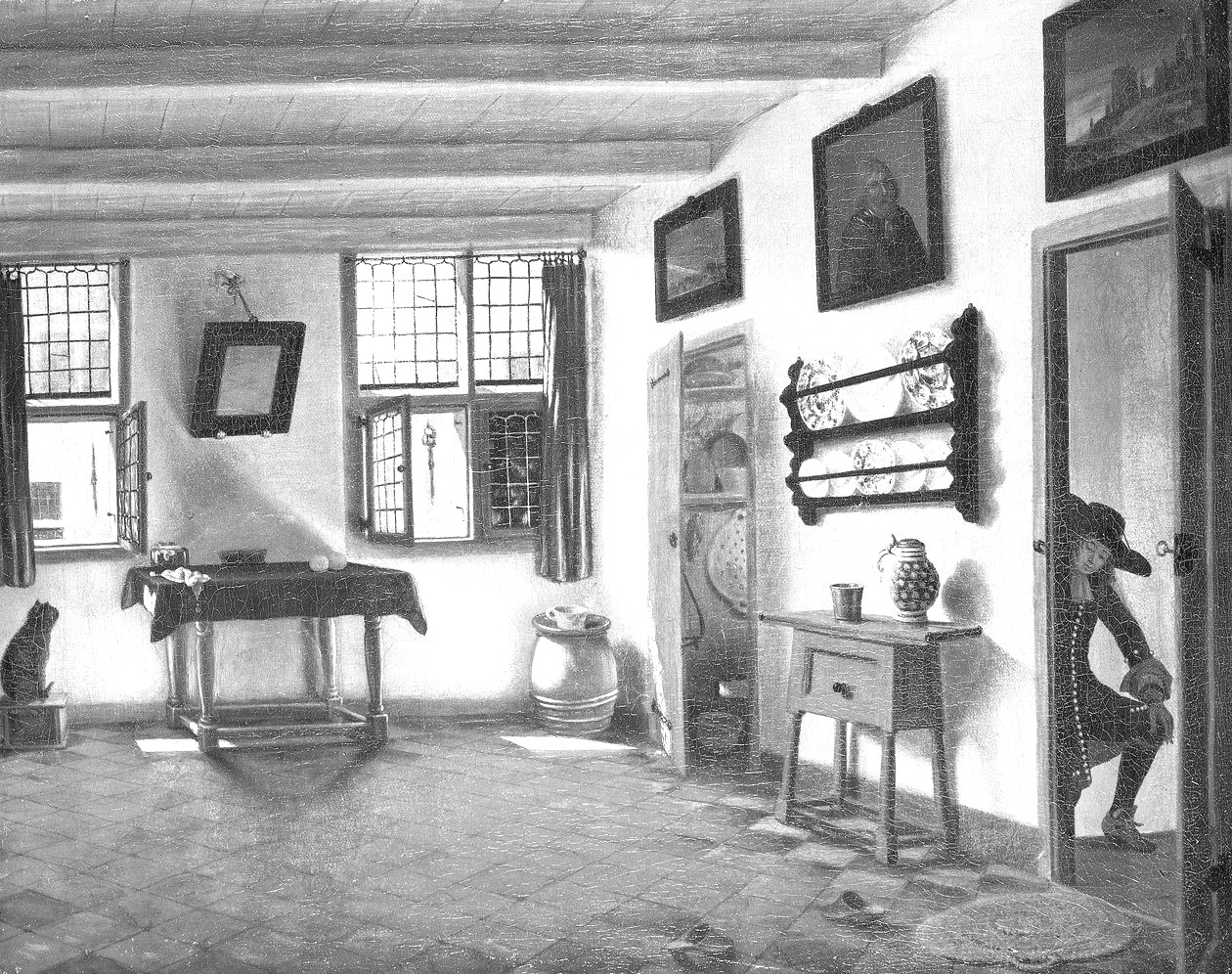
Questions of space come up again and again in my coaching practice. Clients often describe their difficulties and their possibilities in spatial terms: feeling cornered, having room to breathe, lacking a place, being constantly on display, needing distance. They describe offices that constrict them, homes that have ceased to feel like their own, cities that energise or exhaust them, and digital environments that are ubiquitous and curiously placeless at the same time. This spatial vocabulary is part of how people experience their lives and make sense of their own agency, which fits research on how metaphor structures experience (Lakoff & Johnson, 1980).
Many coaching conversations are, among other things, conversations about space. Discussions of workplace conflict often lead to a mapping of spatial arrangements: who sits where, who has a door, who passes through which corridor, who is permanently reachable and who is able to withdraw. When someone feels out of place in a new role or country, the experience goes beyond cognition and belief to include embodied disorientation, unfamiliar rhythms, and the sense that the environment does not yet hold them. Similarly, difficulties with concentration, relationships, or rest often lead to an examination of the spaces in which a person works, meets others, moves, and sleeps, and of how these spaces are organised.
My attention to these matters comes from many years of work as a human geographer before I trained as a coach. Within that discipline, space is conceptualised as lived, produced, contested, remembered, and structured by social relations; the notion of space as a neutral container in which events unfold has long been subject to critique. My research addressed how places are constituted through everyday practices, how institutional settings stabilise particular patterns of behaviour, how power relations acquire spatial expression, and how attachments to environments become constitutive of identity. This background continues to inform how I listen in coaching. Behind individual narratives, I tend to discern the spatial arrangements within which those narratives become possible, difficult, or unsustainable.
My approach works across four dimensions: body, space, time, and relationships. Within it, space functions as both a concrete and an analytical category. I am particularly interested in how physical environments, social settings, and symbolic geographies interact with bodily states, temporal trajectories, and relational patterns. A change in office layout can alter patterns of interaction, influencing who speaks to whom and when. Relocation to another city can reshape a person's sense of identity and of what seems possible. The reorganisation of domestic space can redistribute rest, intimacy, and care within a household. Spatial questions are thus integral to the processes through which decisions and actions take shape.
Many coachees have an implicit, if under-articulated, awareness of how space affects them. They know that they think more clearly in some rooms than in others, that certain routes through a city calm them while others agitate them, and that they behave differently when seated at a large table than when standing in a corridor. Such observations tend to remain at the level of tacit knowledge (Polanyi, 1966). Coaching offers an opportunity to bring this knowledge into the foreground and to examine how spatial arrangements support or constrain the lives people are seeking to lead.
This series develops these observations through five theoretical traditions that have shaped my own understanding of space. The first is phenomenology, which provides a vocabulary for lived space and for the body as the primary medium through which environments are encountered (Merleau-Ponty, 1945/2012; Bachelard, 1958/1994). The second is humanistic geography, with its attention to place, attachment, insideness, outsideness, and placelessness (Relph, 1976; Tuan, 1977). The third comprises relational and critical approaches, which emphasise that space is produced through social relations, power, and differential access (Lefebvre, 1974/1991; Massey, 2005). The fourth addresses the entanglement of time, space, and embodiment, and the reciprocal shaping of lived temporality and spatial experience (Hägerstrand, 1970; Seamon, 1979). The fifth turns to relationships and intersubjective space, asking how the space between persons is constituted through presence, recognition, and interaction (Buber, 1923/1970; Honneth, 1992/1995).
Taken together, these perspectives offer a more differentiated framework for understanding the situations people bring into coaching. Alongside the question of what someone thinks or feels, they open up further questions: where those thoughts and feelings are lived, how environments structure a person's possibilities, and which kinds of spaces make change more or less available. This is the conceptual framework within which the texts that follow will unfold.
References
Bachelard, G. (1994). The poetics of space (M. Jolas, Trans.). Beacon Press. (Original work published 1958)
Buber, M. (1970). I and thou (W. Kaufmann, Trans.). Scribner's. (Original work published 1923)
Hägerstrand, T. (1970). What about people in regional science? Papers of the Regional Science Association, 24, 7–21.
Honneth, A. (1995). The struggle for recognition (J. Anderson, Trans.). Polity. (Original work published 1992)
Lakoff, G., & Johnson, M. (1980). Metaphors we live by. University of Chicago Press.
Lefebvre, H. (1991). The production of space (D. Nicholson-Smith, Trans.). Blackwell. (Original work published 1974)
Massey, D. (2005). For space. Sage.
Merleau-Ponty, M. (2012). Phenomenology of perception (D. A. Landes, Trans.). Routledge. (Original work published 1945)
Polanyi, M. (1966). The tacit dimension. Doubleday.
Relph, E. (1976). Place and placelessness. Pion.
Seamon, D. (1979). A geography of the lifeworld: Movement, rest and encounter. Croom Helm.
Tuan, Y.-F. (1977). Space and place: The perspective of experience. University of Minnesota Press.